
In this month’s spotlight, we are pleased to highlight Kevin Lai, an Executive MPH candidate at the Yale School of Public Health, specializing in Health Informatics and Policy. He currently works as an independent consultant in health strategy and technology, with prior experience at Oracle Health and as a management consultant at McKinsey & Company within the Social, Healthcare, and Public Entities Practice. With a strong interest in the intersection of healthcare, policy, and technology, Kevin is particularly focused on advancing access, efficiency, and health outcomes through scalable solutions.
In this feature, Kevin explores the critical intersection of nutrition policy and education on a global scale, highlighting how strategic policy decisions can shape health outcomes, learning environments, and long-term societal development.
Introduction
Food is the most fundamental human need, the first rung on Maslow’s hierarchy, and the essential fuel the body requires to function both physically and cognitively. Without adequate nutrition, children struggle not only with growth and health, but with concentration, learning, and academic achievement (Locke et al., 2025).
I know this not just from research, but from experience. I immigrated from Vietnam to the United States, and growing up, my family hovered just above the income threshold to qualify for free school meals. We were not wealthy, far from it, but on paper, we did not qualify. That line between qualifying and not qualifying meant real financial pressure on my family, and it is a line that shapes the daily reality of millions of children across the country. A universal free school meal program would have made a genuine difference for us, and for countless families like ours who fall through the cracks of targeted systems.
Nutrition policy plays a critical role here. Across the globe, governments have implemented school feeding programs to support child development, address hunger, improve nutritional intake, and promote educational participation, particularly among vulnerable populations. But the design, funding, and effectiveness of these programs vary enormously by country, shaped by economic resources, political priorities, and social welfare structures.
To explore these differences, this blog examines school nutrition policies in Finland, the United States, and Vietnam. These three countries vary widely in population size, GDP, and socioeconomic context, and together they illustrate just how much policy design determines who gets fed, and who does not.
The choice to focus on Finland, the United States, and Vietnam was intentional. Together, they show three very different approaches to school nutrition and the conditions that shape them. Finland serves as a benchmark because it has a long history of universal school meals and strong educational outcomes. The United States reflects a high‑income country that relies on targeted, income‑based programs that vary in how well they reach students. Vietnam offers a lower‑ and middle‑income perspective, where school feeding efforts are closely tied to nutrition improvement and development goals. I also included the United States and Vietnam because I know these systems personally, which helps ground the policy comparisons in lived experience.

What school lunches look like in each country
Before diving into policy, it helps to start with something concrete: the food itself. What ends up on a child’s lunch tray reveals a lot about a country’s nutrition priorities, cultural values, and economic realities.
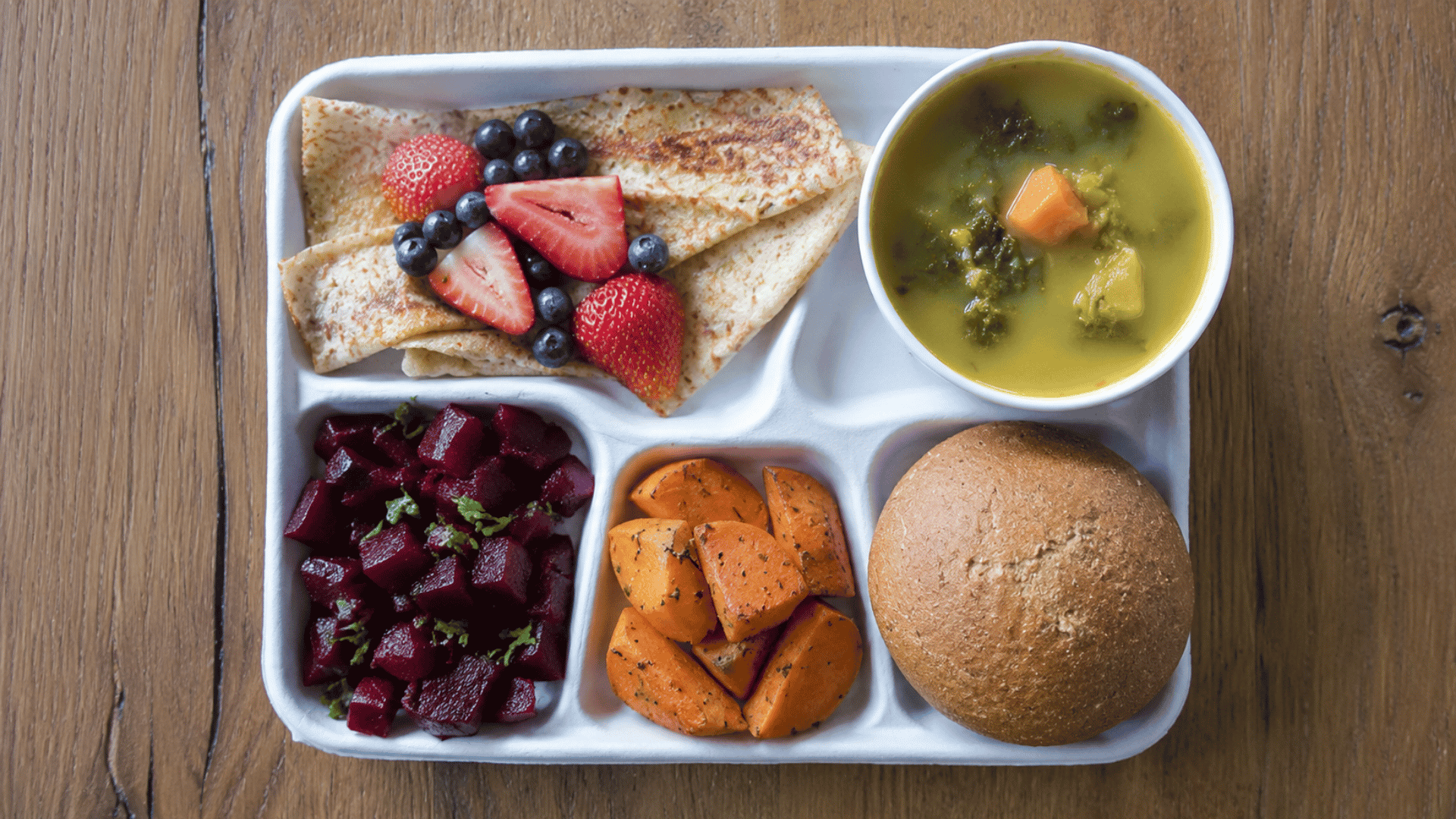
Finland: A typical Finnish school lunch might include pea soup, beets, carrot salad, bread, pannukakku (a baked dessert pancake), and fresh berries. These meals follow the Nordic Nutrition Recommendations 2023, which emphasize whole foods, plant‑forward eating patterns, and sustainability. Because Finland provides universal free school lunches, these standards shape what every student eats, making nutrition and environmental stewardship part of the everyday school experience.
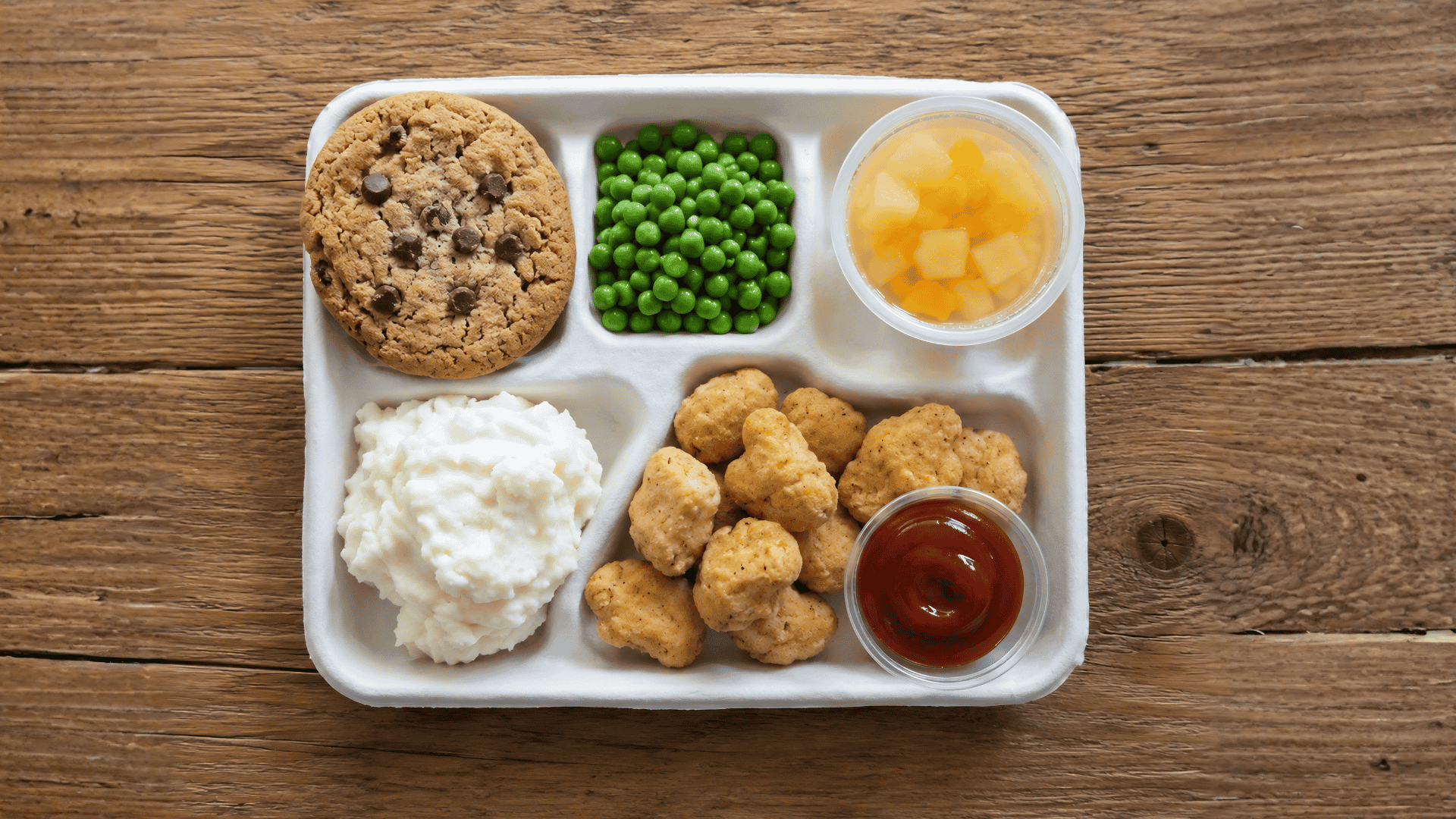
USA: A typical U.S. school lunch might include fried chicken nuggets, mashed potatoes, peas, a fruit cup, and a chocolate‑chip cookie. Meals like this are designed to follow U.S. Department of Agriculture (USDA) nutrition standards, which are based on the Dietary Guidelines for Americans, 2025–2030. These guidelines emphasize offering fruits, vegetables, whole grains, and nutrient-dense foods while limiting added sugars, sodium, and saturated fats. In practice, schools balance these requirements with cost, student preferences, and kitchen capacity, resulting in menus that meet federal standards but vary widely in nutritional quality and consistency across districts.
Vietnam: A typical Vietnamese school lunch might include white rice, melon soup, tofu, a ground‑pork stir‑fry, and fresh dragon fruit. These meals align with Vietnam’s Food‑Based Dietary Guidelines, known as the “10 Tips on Proper Nutrition” and endorsed by the Ministry of Health. In practice, Vietnamese school lunches reflect these principles through simple, home‑style dishes that are affordable, vegetable‑forward, and culturally familiar; supporting children’s growth and energy needs across diverse regions. Growing up, my mom made dishes just like this at home. It’s humble by some standards, but it’s nourishing, and it reflects a food culture built around balance rather than convenience.
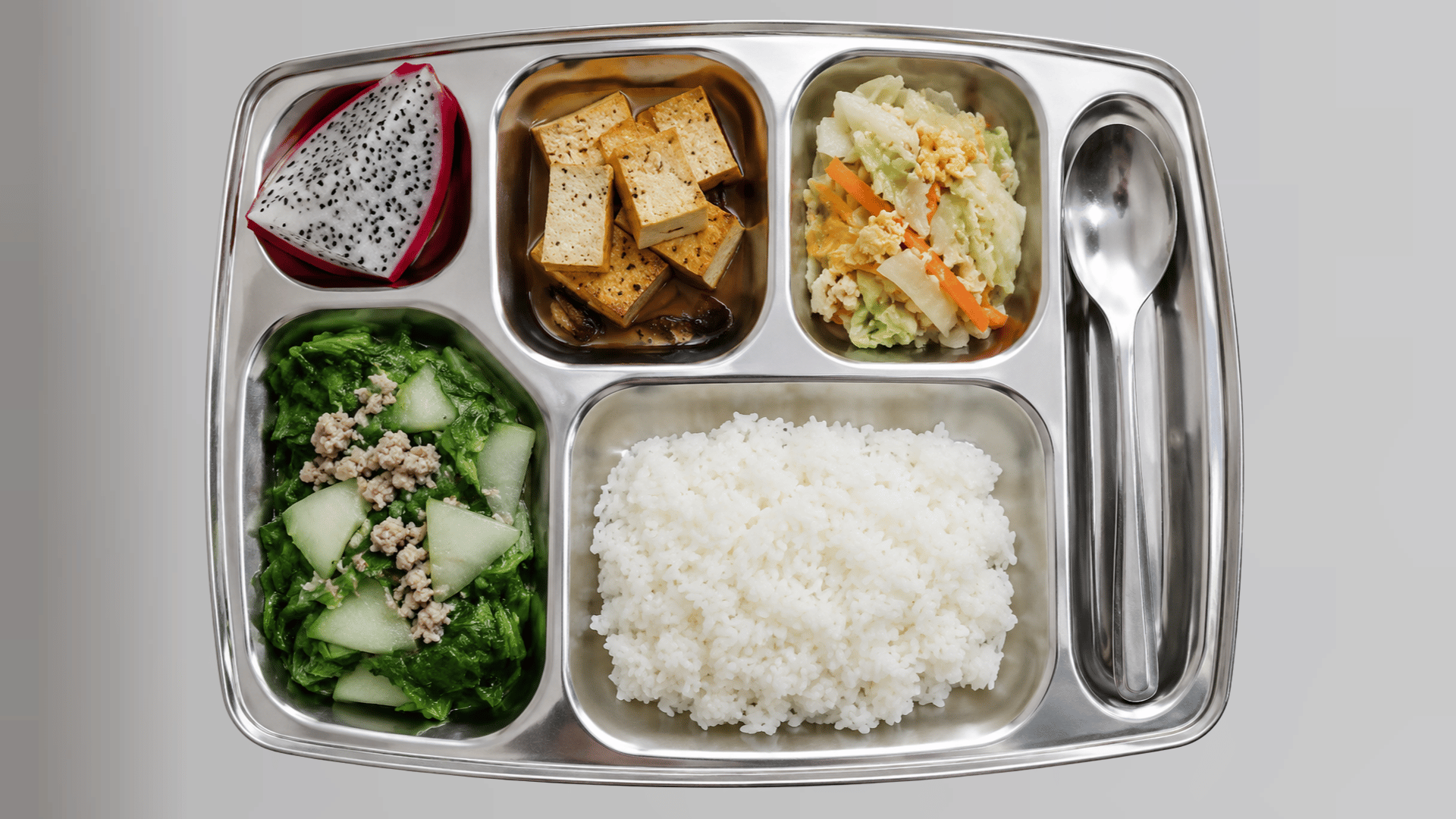
What the meals tell us: Although all three countries aim to nourish students, their school meals look quite different. These differences reflect each country’s nutrition guidelines, cultural food traditions, and economic realities. Finland’s meals tend to be whole‑food, plant-forward, and sustainability-oriented, while the United States often incorporates more processed or convenience based items due to large scale production and cost structures. Vietnam’s meals lean toward simple, home‑style dishes built around rice, vegetables, and modest portions of protein. Together, these examples show how national priorities and resources shape what ends up on a child’s lunch tray.
One important distinction is that the Finnish meal shown represents what all K–12 public students receive, whereas in the United States and Vietnam, what a child eats at school depends far more on where they live and what their family can afford.
Finland: Universal Nutrition as an Educational Investment
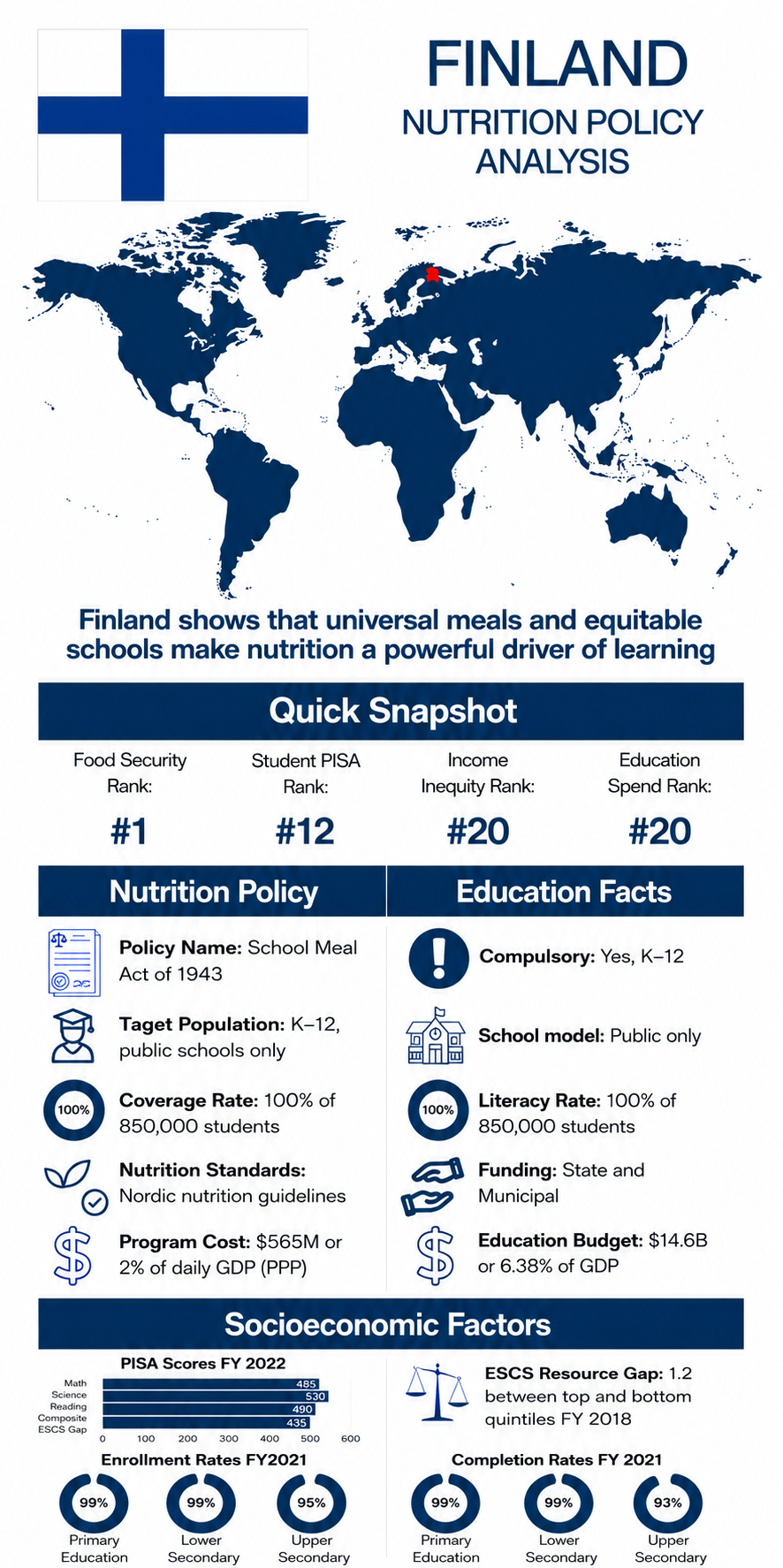
Finland’s school feeding program is widely viewed as a strong example of how nutrition policy can support both education and equity. All students are provided with free, nutritionally balanced meals during the school day, regardless of family income or background. This approach reflects Finland’s broader commitment to equal access within its education system.
By offering meals universally, Finland removes financial barriers and reduces stigma for students. School meals are treated as a normal part of the school day rather than a form of assistance. This consistency helps ensure that all students are able to meet their nutritional needs, which supports focus, learning, and overall well-being (Locke et al., 2025).
These investments are reflected in broader educational outcomes. Finland consistently performs at a high level on international assessments such as the Programme for International Student Assessment (PISA), often outperforming countries like the United States. While multiple factors contribute to these results, Finland’s universal approach to student nutrition highlights how equitable access to basic needs can support academic success at the population level.
United States: Targeted Support Within a Fractured System
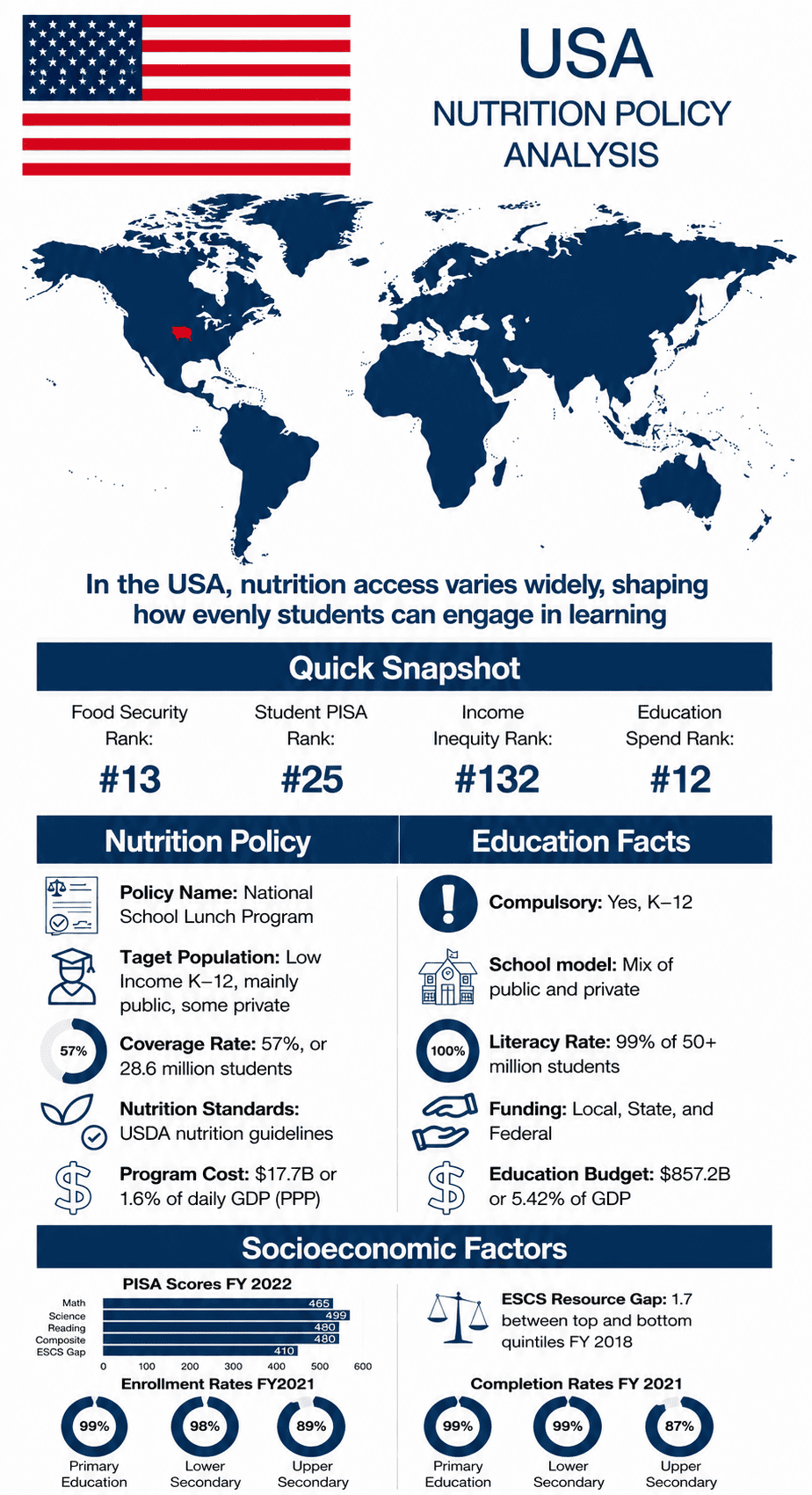
In contrast, the United States takes a more targeted approach to school nutrition through programs such as the National School Lunch Program. Eligibility is largely based on household income, with free or reduced‑price meals available to students from lower‑income families. While these programs reach millions of children and reduce food insecurity, outcomes differ depending on how they are implemented at the state and district levels. For millions of low-income students, these programs are a critical lifeline. But the system has a structural flaw built into its design: it draws a line, and a lot of families end up on the wrong side of it.
My family was one of them. We weren’t far above the threshold, but we were above it, and that was enough to disqualify us. We weren’t starving, but we also weren’t comfortable. The financial burden of school meals was real. And we were far from alone. There’s an entire band of working families, often immigrant families, who earn just enough to be ineligible but not nearly enough to feel food-secure.
Some states have recognized this problem and acted on it. California and Maine have adopted universal free school meal policies, allowing all students to access meals regardless of income. Early evidence from these states shows increased participation, reduced stigma, and improved food security (Cohen et al. 2021). But these are exceptions. Most states still rely on income-based eligibility, which means lower participation rates, more administrative burden, and students who qualify but never enroll because the process is confusing or the stigma isn’t worth it.
The educational data reflects these gaps. The U.S. performs below the OECD average on PISA, with one of the largest SES-based achievement gaps among developed nations. Wealthier districts score dramatically higher than high-poverty ones. That gap has many causes, but inconsistent access to basic nutrition is part of the picture, and it’s one of the more solvable parts, if the political will exists to address it.
Vietnam: Nutrition Policy in a Developing Context
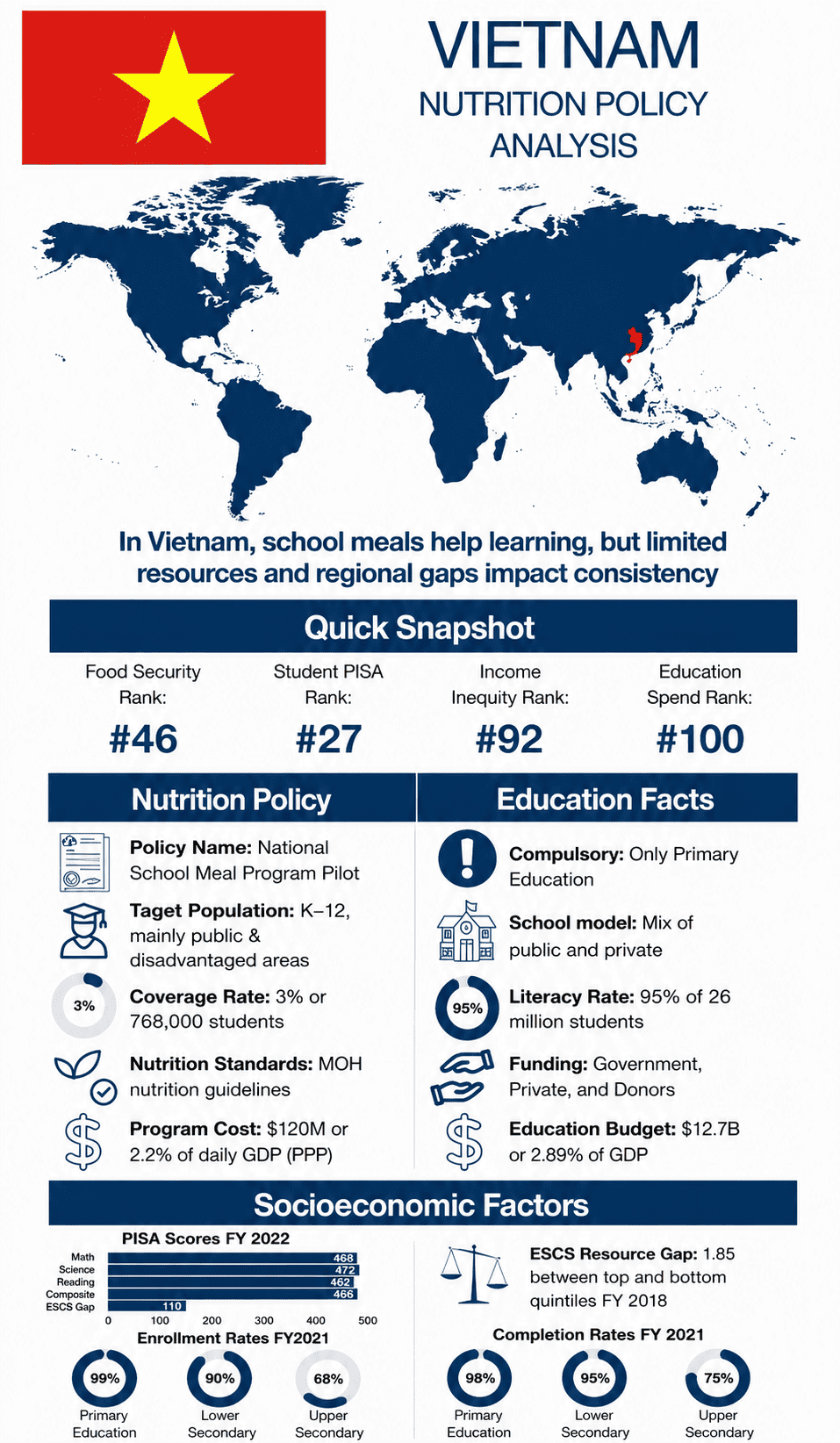
Vietnam does not have the resources Finland does, and its school feeding programs reflect that reality. Rather than a national universal system, programs are targeted toward the communities that need them most: rural areas, mountainous regions, and ethnic minority populations where undernutrition and stunting remain serious concerns.
Government programs and international partnerships have supported these efforts, and the results are real. School attendance has improved and undernutrition has declined in the communities they reach (Bundy et al., 2018). That is meaningful progress, even if coverage remains uneven. Urban private and international schools, by contrast, operate on a tuition-based model where families pay separately for meals, a stark reminder that access to school nutrition in Vietnam depends heavily on where you live.
What makes Vietnam’s story particularly striking is what it achieves despite these limitations. Vietnam performs above the OECD average on PISA, a remarkable result for a lower-middle-income country. Researchers point to a strong cultural emphasis on education, high expectations, and relatively consistent instructional quality. But gaps remain. Rural and ethnic minority students still face higher rates of undernutrition and lower academic performance than their urban peers. Expanding school feeding programs in these communities would not just address hunger; it would directly support the attendance and focus that learning requires.
Having visited relatives in Vietnam, I saw firsthand how much a simple shared meal can mean, not just nutritionally, but socially. School lunch was not just food; it was part of the rhythm of the day, a moment of normalcy. Expanding that to more students is less a luxury than a logical next step.
Conclusion: Key Takeaways Across Countries
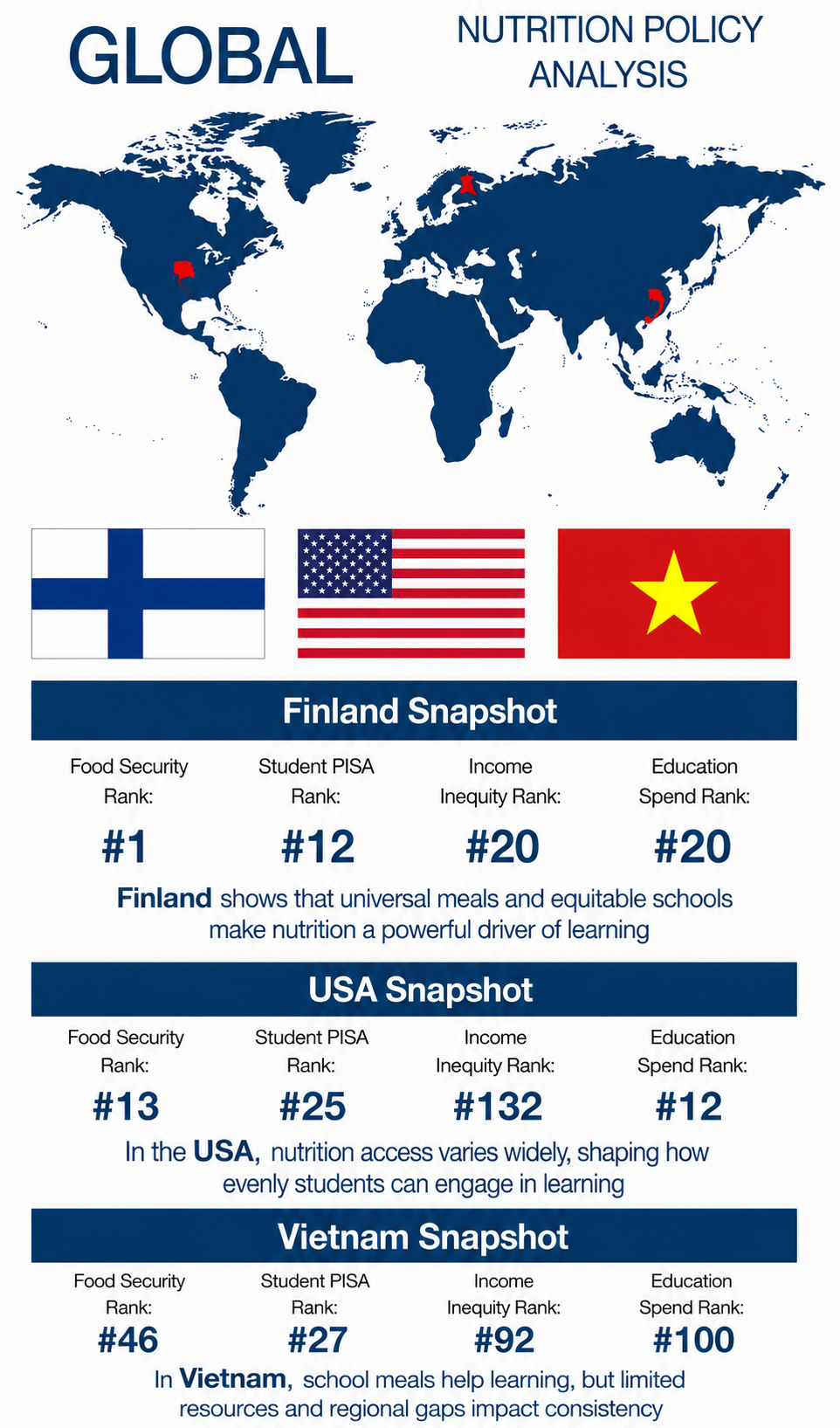
Although these countries differ widely in their economic resources and policy approaches, one thing becomes clear: nutrition and education are deeply connected (Locke et al., 2025). When children do not have reliable access to adequate food, their ability to learn, focus, and succeed in school is compromised.
Finland consistently performs at high levels on international assessments like PISA, while Vietnam outperforms expectations despite its limited resources. Many factors contribute to these results, but consistent access to nutritious meals plays an important supporting role in both cases.
How programs are designed matters just as much as whether they exist at all. Universal programs reduce stigma, increase participation, and reach the families that targeted systems miss, including families like mine, who earned just enough to be ineligible but not enough to feel secure. Finland figured this out. So have California and Maine. The evidence is there.
School feeding programs aren’t charity. They’re infrastructure. The question isn’t whether they work. It’s whether we’re willing to treat every child’s ability to learn as worth investing in, regardless of what their parents earn.
Key Terms (Glossary)
- Economic, Social, and Cultural Status (ESCS)
A composite index used in international education assessments (such as PISA) to measure a student’s socioeconomic background, typically derived from parental education, parental occupation, and household resources. - Food Insecurity
Limited or uncertain access to enough nutritious food - Gini Coefficient (GINI)
A statistical measure of income inequality within a population, ranging from 0 (perfect equality) to 1 (maximum inequality). - Global Food Security Index (GFSI)
An index that measures and compares food security across countries based on affordability, availability, quality and safety, and resilience and natural resources. - Programme for International Student Assessment (PISA)
An international assessment that measures student performance in reading, math, and science - School Feeding Programs
Government-supported programs that provide meals to students during the school day - Socioeconomic Status (SES)
A measure of an individual’s economic and social position, often based on income, education, and occupation - Targeted School Meal Programs
Programs that provide meals based on income eligibility - Universal School Meals
Programs that provide free meals to all students regardless of income
References
- Billings, K. C. (2025). School Lunch and Breakfast Participation: A Snapshot of Recent Trends. Congress.gov. https://www.congress.gov/crs-product/R48515
- Bundy, D. A. P., de Silva, N., Horton, S., Jamison, D. T., & Patton, G. C. (2018). Optimizing education outcomes: High-return investments in school health for increased participation and learning. World Bank.
- Cohen, J. F. W., Hecht, A. A., McLoughlin, G. M., Turner, L., & Schwartz, M. B. (2021). Universal school meals and associations with student participation, attendance, and diet quality. JAMA Network Open, 4(6).
- Economist Impact. (2022). Global Food Security Index (GFSI). Economist Impact. https://impact.economist.com/sustainability/project/food-security-index/
- Global Child Nutrition Foundation. (2023). Global Survey of School Meal Programs, Vietnam.
- Locke, A., James, M., Jones, H., Davies, R., Williams, F., & Brophy, S. (2025). Impacts of Global School Feeding Programmes on Children’s Health and Wellbeing Outcomes: A Scoping Review. BMJ open, 15(10), e093244. https://doi.org/10.1136/bmjopen-2024-093244
- Ministry for Foreign Affairs of Finland, & Finnish National Agency for Education. (2019). School feeding: Investment in effective learning – Case Finland.
- News, V. (2025). Hanoi to spend $118 million on school meals for primary students. VietNamNet News. https://vietnamnet.vn/en/hanoi-to-spend-118-million-on-school-meals-for-primary-students-2408486.html
- OECD. (2023). PISA 2022 Results (Volume I). OECD. https://www.oecd.org/en/publications/pisa-2022-results-volume-i_53f23881-en.html
- OECD. (2024). The Measurement of Socio-economic Status in PISA. OECD. https://www.oecd.org/en/publications/the-measurement-of-socio-economic-status-in-pisa_0c5b793c-en.html
- Todd, J. (2025, August 25). USDA ERS – National School Lunch Program. Www.ers.usda.gov. https://www.ers.usda.gov/topics/food-nutrition-assistance/child-nutrition-programs/national-school-lunch-program
- UNESCO. (2023). Databrowser. Unesco.org. https://databrowser.uis.unesco.org
- World Bank. (2024a). GINI Index. World Bank. https://data.worldbank.org/indicator/SI.POV.GINI
- World Bank. (2024b). Government Expenditure on education, Total (% of GDP) | Data. Worldbank.org. https://data.worldbank.org/indicator/SE.XPD.TOTL.GD.ZS
- World Food Programme. (2025). State of school feeding worldwide 2024. https://doi.org/10.71958/wfp130772

Kevin Lai
Author